Showing posts with label epidemiology. Show all posts

Wednesday, 6 March 2019

PLAIN ENGLISH: Organ transplants and risk of Parkinson's


This is another interesting study borne out of large USA health insurance databases (Medicare database). The team from Washington noticed, whilst using the same data to see if they could identify people at high risk of Parkinson’s, that people with Parkinson’s were less likely to have received an organ transplant than someone without Parkinson’s. This implies that people who have had organ transplants have a reduced risk of Parkinson’s. They decided to investigate this further because it could important implications in developing a medication to prevent Parkinson’s.

They identified 94,155 people with Parkinson’s and then they randomly selected 118,295 people without Parkinson’s in a similar age group. Overall 278 people with Parkinson’s had also had a tissue transplant and 302 of the people without Parkinson’s had a tissue transplant. They found that the odds of having Parkinson’s after a tissue transplant were reduced.

It’s unclear what is causing this effect but one of the possibilities is the medication that transplant patients are on. People who have received transplants are usually started on medication that lowers the body’s immune system to prevent the body rejecting the transplant. It is possible that these medications could be protecting the brain in some way from Parkinson’s. Unfortunately we cannot be sure at the moment and more research is needed to understand the science underlying this!


Parkinsonism Relat Disord. 2019 Feb 14. pii: S1353-8020(19)30059-8. doi: 10.1016/j.parkreldis.2019.02.013. [Epub ahead of print]

Transplant and risk of Parkinson disease.
Fan J1, Searles Nielsen S2, Faust IM3, Racette BA4.
Author information
Abstract
INTRODUCTION:
The pathophysiology of Parkinson's disease (PD) remains unclear, but growing evidence supports a role of neuroinflammation. The purpose of this study was to investigate the association between tissue transplantation and PD risk, given the importance of immunosuppressants in post-transplant management.
METHODS:
We performed a case-control study among Medicare beneficiaries age 66-90 using claims from 2004 to 2009. We used International Classification of Diseases, Ninth Edition (ICD-9) and Current Procedural Terminology (CPT) codes to identify PD (89,790 incident cases, 118,095 population-based controls) and history of tissue transplant (kidney, heart, liver, lung, and bone marrow). We investigated risk of PD in relation to tissue transplant in logistic regression models, adjusting for age, sex, race, smoking, and overall use of medical care.
RESULTS:
Beneficiaries who had received a tissue transplant at least five years prior to PD diagnosis or reference had a lower risk of PD (odds ratio [OR] 0.63, 95% confidence interval [CI] 0.53, 0.75) than those without tissue transplant. This inverse association was observed for kidney (OR 0.63, 95% CI 0.47, 0.84), heart (OR 0.58, 95% CI 0.40, 0.83), lung (OR 0.41, 95% CI 0.21, 0.77), and bone marrow (OR 0.57, 95% 0.38, 0.85) transplants. Associations were attenuated, but remained, following adjustment for indications for the respective type of transplant. Liver transplant was not associated with PD risk.
CONCLUSIONS:
Patients undergoing tissue transplant may have a lower risk of developing PD than the general population. Further studies are needed to determine if this association is causal and if immunosuppressants mediate this association.

Sunday, 18 November 2018

The prodromes of Parkinson's

Following on nicely from our last post, we are delighted to publicise our latest peer-reviewed publication.

This will come out in a special edition of the European Journal of Neuroscience, dedicated to the memory of Tom Isaacs. Tom was the founder and leader of the Cure Parkinson's Trust - a truly dynamic leader and a real disruptive presence (in all the right ways) within  Parkinson's research. We are honoured to have our names and our ideas as testimonial to him in this way.

It is clear that Parkinson's is more of an umbrella condition than one single entity. For instance, some people have significant tremor, while others have none. Some progress very slowly, and a decade from diagnosis have barely any more symptoms - others progress more quickly. For many Parkinson's affects mainly movement while others have many non-motor symptoms. It is likely (although not yet proven) that these different subtypes of Parkinson's have a different underlying process causing them.

It therefore stands to reason that the earliest phases are also different. In our article we lay out the evidence that Parkinson's that comes from people with a particular kind of sleep disorder (REM sleep behavioural disorder), smell loss, and genetic forms do all look different. The evidence is not bomb-proof, but in Predict-PD we will be able to shed light on both the sleep disorder, smell loss and try and pick apart differences in the general population.

To see the article, please see the journal website. Please also remember to talk to friends and family to read more about the study and sign up themselves: www.predictpd.com

RNR


Thursday, 1 November 2018

PLAIN ENGLISH: Does removal of the appendix impact the risk of Parkinson's Disease?

Multiple large news organisations yesterday were reporting the results of a study showing that people who have had appendectomies (surgical removal of the appendix) have a lower chance of developing Parkinson's disease. Its a neat paper which links large amounts of data from medical databases and histology results (looking at tissue under the microscope) on a much smaller number of patients.

First they looked at the Swedish National Patient Registry, a database of 1,698,000 people followed up for 52 years, and identified anyone who had a history of an appendectomy (551,647 people). They then matched these patients to two 'control' patients who had not had appendectomies but were similar in age, sex and geographical to the original patients. They interestingly found that the chance of having Parkinson's disease was 19.3% lower in the participants with appendectomies than the 'control' participants who had not had appendectomies. They also found that the participants who had appendectomies and developed Parkinson's on average developed Parkinson's 1.6 years later than the Parkinson's patients who still had their appendix. Interestingly this effect was not observed in participants who had known genetic mutations causing their Parkinson's suggesting that if the appendix has any effect on the development of Parkinson's it is only in patients whose Parkinson's has an 'environmental' trigger or cause.

This part of the study was not novel or new and previous similar studies have been done and found no association between appendectomy and PD. In a Canadian study they actually found a higher rate of PD in patients who had appendectomies in the past 5 years. So despite the results of this study being very interesting they are not backed up by previous studies.

The novel part of this study is the histological analysis where the researchers analysed the 48 peoples appendixes under the microscope. These participants did not have PD. The appendixes were analysed under the microscope for clumps of protein which have stuck together that we call 'aggregates of α-syneuclein'. These are the key feature of PD that can be found in PD patients brains at autopsy. In other words the misfolded protein that causes PD when it is seen in the brain can be seen in young, healthy peoples appendix. These misfolded proteins were detected in both young and old people.

There are some problems with this study; first is that in large databases it is very difficult to know the accuracy of the Parkinson's diagnosis and previous studies investigating the reliability of this found only a 70.8% chance that it is reliable. They also only examined the appendix under the microscope and did not check any other tissues to compare.

This study does provide some food for thought; at the end of the paper the authors hypothesise that the appendix is the source of the misfolded protein that then spreads through the gut and up the vagus nerve to the brain thereby causing Parkinson's disease. This gut to brain model of the development of Parkinson's disease is often discussed and is a popular research topic at the moment. However the results of this study should still be taken with a pinch of salt because there are a number of large scale similar studies that precede this study that do not come to the same conclusion, that doesn't stop it being interesting though!

Tuesday, 30 October 2018

Preventive Neurology Unit Showcase

Yesterday alongside the launch of the second phase of PREDICT-PD (a new drive to recruit 10'000 participants to the study!) was the showcase of the Preventive Neurology Unit. The Preventive Neurology Unit is a new and exciting unit that is part of the Wolfson Institute at Queen Mary University London. The Wolfson Institute of Preventive Medicine has a proud history of leading the way in terms of cancer prevention and epidemiology with many high impact publications. Now, thanks to Barts Charity, we are trying to replicate some of the successful preventive techniques used in cancer and apply them to neurological diseases.

The showcase yesterday gave the three senior clinical lecturers the opportunity to explain some of their work and objectives as well as hearing from Professor Jack Cuzick and Professor Gavin Giovannoni about their hopes for this new unit.

The showcase began by Dr Charles Marshall explaining his work regarding the benefits and difficulties of diagnosing Alzheimer's disease as early as possible. Current research suggests that amyloid deposits can begin accumulating in patient's brains up to 20 years before they have any symptoms of dementia. This period before symptoms begin would be the ideal time to intervene with medications to prevent the onset of dementia but unfortunately there is no way to easily identify these people. Dr Marshall explained how the use of 'Brain Stress tests' could help to identify patients before they develop any symptoms of dementia and how his work will use these tests to see if people who will go onto develop Alzheimer's dementia can be identified earlier and therefore start treatments sooner.

Next up was Dr Alastair Noyce who explained the PREDICT-PD project which I am sure most readers of this blog are familiar with. Dr Noyce explained how the project evolved from a keyboard tapping test called the BRAIN test and now has 1000 participants who have been taking part over 5 years and will soon have 10'000 participants! The benefits of this research could be huge if we can begin to identify patients who are highly likely to develop Parkinson's before they suffer from any symptoms then we can begin to start trying to prevent Parkinson's in the first place. Dr Noyce also explained some fascinating results about Exenatide (a diabetes medication) which has recently been shown to potentially have some neuroprotective effect in Parkinson's and could be the first disease modifying medication for Parkinson's disease. Medications such as this would be ideal to use in further studies if PREDICT-PD can successfully identify those at high risk of Parkinson's.

The final talk about preventive approaches to Multiple Sclerosis was delivered by Dr Ruth Dobson. The complex links between EBV, childhood obesity and vitamin D levels were examined. Dr Dobson explained some of the intriguing results regarding EBV infection and Multiple Sclerosis and some of the difficulties of interpreting this relationship. The audience was also fascinated to hear about the links between foetal and neonatal vitamin D levels and MS. The main point that Dr Dobson emphasised is that a preventive approach to MS has to happen much earlier than the couple of years prior to diagnosis; the most important potential modifiable risk factors are all in early childhood or potentially in-utero!

Overall the showcase was very successful and the audience provided lots of insightful questions and interesting discussion. It is an exciting time to be working on preventive approaches to neurological disease and yesterday definitely highlighted that.

Wednesday, 24 October 2018

Why more Parkinson's might not be such a bad thing


This week, the Lancet Neurology have published the "Global, regional, and national burden of Parkinson’s disease, 1990–2016: a systematic analysis for the Global Burden of Disease Study 2016", a very large and very complex analysis of the amount of Parkinson's all over the world.
As can be seen from the map below, there are huge differences in the rate of Parkinson's. Some of the reasons for this are clear, and some are less well understood.

Worldwide rates of people with Parkinson's (age-standardised prevalence per 100,000 population in 2016)


What is more interesting is the rates of change. Parkinson’s was the fastest growing condition in terms of prevalence, disability and death of all neurological conditions. Since 1990, the prevalence (number of people with a condition), mortality, and disability-adjusted life-years (One DALY can be thought of as one lost year of "healthy" life. Read more about DALYs here), have more than doubled. In part this is because of the population of the world getting older. This figure shows the rates of Parkinson’s for men and women at different ages.

The percentage of men (red) and women (blue) with Parkinson's by age. The line is  the current estimate, with the shaded area being the region of uncertainty in which the 'true' figure lies.

Although there are many reasons why this increase is being seen, one reason is that the prevalence is related to two things: how many people receive a new diagnosis, but also how long people with a condition live with it. If the rate of new diagnoses has not significantly changed (the evidence remains unclear), in a generation we have enabled people with Parkinson’s to live longer. The authors remind us that this is only partly due to drugs like levodopa, and also due to the general increase in sanitation, food security, general health improvement, vaccination etc. as well as attention to things like physiotherapy, speech and language therapy etc.

So as we go forward, lets hope that the number of people with Parkinson’s continues to increase, but the DALYs decrease. And lets continue to work hard so we can at last make a real change to the incidence of Parkinson’s.

RNR

Monday, 3 September 2018

News from the Land of Milk and Honey

I had the good fortune to attend a conference on Precision Medicine and Ageing today. This brought some of the leading scientists from the UK and Israel together, as part of the British Council’s Britain Israel Science and Innovation Network. The day included speakers talking about the latest breakthroughs in genomics, neuroscience, cellular biology and many other fields of scientific endeavour and how they relate to the biology of ageing (in health as well as disease) and how these breakthroughs are bringing us closer to the ‘promised land’ of Personalised, or Precision medicine.

The talk that I found the most interesting came from Dr Maya Leventer-Roberts, from the Clalit Research Institute. This is not a university department, but the in-house research arm of the largest of Israels four health providers. They have an unparallelled treasure-trove of health data. She explained that all Israeli citizens belong to one of these four organisations who provide all aspects of care: GP, pharmacy, testing laboratories, hospitals – you name it. What’s more, very few people change providers, so they have a well-coded database of people’s wellness, illness and health behaviour at all stages of life.

I have since found a paper from last year which uses some of their data to examine a relatively neglected aspect of Parkinson’s – depression. Unfortunatley a huge proportion of people with Parkinson’s struggle with depression. We also know that late onset depression is a risk factor for Parkinson’s. 

In this study, they looked at mortality rates in Parkinson’s and the association with how adherent people were with antidepressents. They analysed the data of 10,000 people with a diagnosis of Parkinson’s as well as at least one prescription of an antidepressant. They then categorised people into how frequently they tookthe antidepressants by comparing their prescriptions from the doctor with the number of purchases of antidepressants from the pharmacies. Finally they looked at death by any cause over the 4 year study period.

They found that the people who had Parkinson’s and depression who took their antidepressants the least were 43% more likely to die within the 4 year period, compared to those who took it the most regularly. The increased mortality was exacerbated by having an increasing number of other medical problems.

I must stress the old adage: association does not equal causation. This kind of retrospective observational study cannot provethat one thing causes another. However, it is an important reminder that depression is an important aspect of Parkinson’s, and that poorly managed depression is associated with increased mortality. It also reminds me that older people, with Parkinson’s, depression and perhaps four or five other medical conditions may be on 15-20 or more tablets a day. What can I do as a clinician to help them remember what each is for, and why each is important to take? What can we do as a society to help people with depression with both drug and non-drug treatment options? How can we better prepare ourselves, individually and societally, for ageing and the only true inevitability of life?

RNR

Shoval G, Stubbs B, Balicer RD, Feldman B, Hoshen M, Zalsman G, et al. 
Low adherence to antidepressants is associated with increased mortality in Parkinson disease patients. 
Parkinsonism Relat Disord. 2017 Oct;43:92–6.


INTRODUCTION:The purpose of this study was to evaluate the relationship between adherence to antidepressants (AD) and all-cause mortality in a population-based cohort of patients with Parkinson's Disease (PD).

METHODS:From a database of more than 4 million people, 8553 patients with PD who purchased an AD at least once between the years 2008-2011 were retrospectively followed for all-cause mortality over 4-years. Adherence was measured as a ratio between dispensed and prescribed durations and was modeled as: non-adherence (<20%, n = 1566), poor (20%-50%, n = 1184), moderate (50%-80%, n = 1584), and good (>80%, n = 4219) adherence. Multivariable survival analyses adjusted for demographic and clinical variables including physical comorbidities known to influence mortality were conducted, however there was no adjustment for other psychiatric disorders and medications.

RESULTS:Unadjusted mortality rates were 20.4%, 25.1%, 23.4% and 25.6% in those classified as non-adherent, poor, moderate and good adherence respectively (χ2 = 18.45, p < 0.0001). The non-adherent and poor adherence groups had significantly increased adjusted mortality hazard ratios (HR) of 1.43 (CI: 1.26-1.62) and 1.26 (CI: 1.1-1.44) respectively compared to the good adherence group. Using the same model, the adjusted HR for death among males was 1.49 [95% CI: 1.36-1.62] compared to females. People with PD and Charslon's Comorbidity Index score of 3-4 (HR 1.3, P < 0.001) and 5+ (HR 1.78, P < 0.001) were more likely to die than those with 0-2 comorbidities.

CONCLUSIONS:Our findings suggest that poor adherence to AD is associated with increased all-cause mortality in people with PD. Given the high prevalence of depression and AD effectiveness, efforts to promote adherence should be prioritized in clinical practice.

Friday, 31 August 2018

Raising a glass to Parkinson's?

Lifestyle factors have been studied at length in relation to Parkinson's Disease and there is good evidence that having ever smoked is associated with reduced risk of the disease. Alcohol drinking has also been linked to reduced risk of disease, and multiple studies have looked at the association. The difficulty with drawing robust conclusions in this area relates to the design of the studies - many of the studies are case control, taking people with and without the disease and asking them to report whether and how much they drink now and in the past. This kind of study suffers from problems with bias - if you have been diagnosed with the disease you are more likely to have attended hospital, to be the kind of person who worries about their health and so makes more health-conscious choices, you may recall things differently in light of your diagnosis and you are likely to have made different choices subsequent to diagnosis.

Longitudinal studies of populations who are healthy at baseline are less likely to suffer from these biases as reporting of alcohol consumption is made prior to subsequent diagnosis. This problem with investigating causation in medicine is illustrated nicely by a study published in the Journal of Neurology by a Spanish team. They looked at 31 studies in the field and broke down the analysis into different types of study as well as looking seperately at men and women and different ways of classifying alcohol consumption.

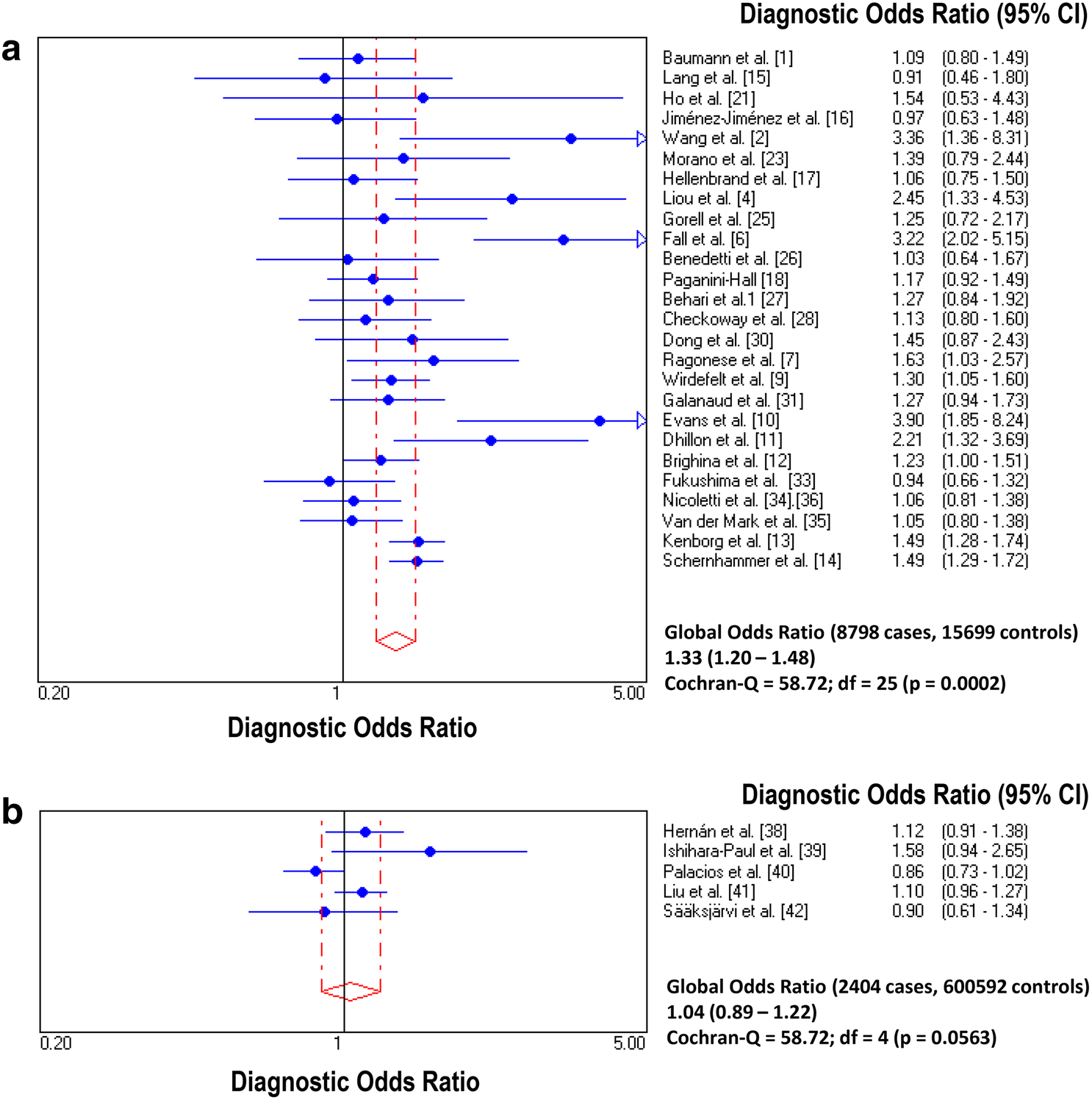
When looking at the case-control studies, as in previous studies, they found higher numbers of 'never-drinkers' in the group with Parkinson's. However, when looking at longitudinal studies, there was no difference in having ever drunk alcohol between people who went on to develop Parkinson's and people who didn't. However, there were far more case-control studies in the article, giving more power to detect these kind of effects, as  you can see in the diagram below.


https://media.springernature.com/original/springer-static/image/art%3A10.1007%2Fs00415-018-9032-3/MediaObjects/415_2018_9032_Fig2_HTML.png
Pooled odds ratios comparing "never drinking" to "ever drinking"alcohol in a)case control and b)prospective longitudinal studies, showing higher likelihood of Parkinson's disease in those who never drank in case control but not longitudinal studies. From https://link.springer.com/article/10.1007/s00415-018-9032-3 
All in all, alcohol consumption remains an interesting part of the puzzle of Parkinson's causation, especially given possible genetic links the authors discuss between variants of the alcohol dehydrogenase gene which cause adverse effects of alcohol and dopaminergic function. In the PREDICT-PD study we are collecting data on alcohol use in all of our participants and will continue to study these links.

-Anna

J Neurol. 2018 Aug 28. doi: 10.1007/s00415-018-9032-3. [Epub ahead of print]
Alcohol consumption and risk for Parkinson's disease: a systematic review and meta-analysis.
Jiménez-Jiménez FJ, Alonso-Navarro H, García-Martín E, Agúndez JAG
The possibility that alcohol consumption should be considered as a "protective factor" for Parkinson's disease (PD) has been suggested by several case-control studies. However, other case-control studies and data from prospective longitudinal cohort studies have been inconclusive. We carried out a systematic review which included all the eligible studies published on PD risk related with alcohol consumption, and conducted a meta-analysis according to the preferred reporting items for systematic reviews and meta-analyses (PRISMA) guidelines. The systematic review was performed using two databases, and the meta-analysis of the eligible studies with the software Meta-Disc1.1.1. Heterogeneity between studies was tested with the Q-statistic. The meta-analysis included 26 eligible retrospective case-control studies (8798 PD patients, 15,699 controls) and 5 prospective longitudinal cohort studies (2404 PD patients, 600,592 controls) on alcohol consumption and PD. In retrospective case-control studies the frequency of PD patients never drinkers was higher and the frequency of heavy + moderate drinkers was lower [diagnostic OR (95% CI) 1.33(1.20-1.48) and 0.74(0.64-0.85)], respectively, when compared to healthy controls. In contrast, in prospective studies, the differences were not significant with the exception of a trend towards a higher frequency of non-drinkers in PD women and a significantly lower frequency of moderate + heavy drinkers in PD men in those studies which stratified data by gender. The present meta-analysis suggests an inverse association between alcohol consumption and PD, which is supported by the results of case-control studies but not clearly by prospective ones.


Wednesday, 8 August 2018

Professional occupation and the risk of Parkinson's disease

This research article investigates the link between occupation and risk of PD... it is not just another paper linking farming to Parkinson's (although I find that link interesting too)... instead it uses a classification model called RIASEC which divides occupations according to personality characteristics. 
This topic has always fascinated me... in part because it plays out in clinical practice and is apparent in the patients one sees in clinic... and in part because if dopaminergic deficit influences choice of occupation, then susceptibility really does begin decades before one gets the diagnosis.
Some of the former observation may be down to selection bias... after all the patients I saw in 5 years at Queen Square generally represent a different demographic to that of patients I see at the Royal London... but my overall clinical impression is still consistent with what the authors observe here.
The link between farming and Parkinson's has always been put down to cumulative  pesticide (or other similar toxin) exposure... but in this paper these are very broad occupational categories seemingly driven by personality traits. The authors attempt to explain the association by the notion that higher dopaminergic activity is associated with creative behaviour (and perhaps occupation) and also offers relative protection against Parkinson's. They present alternative possibilities that relate to smoking (and other substance abuse) potentially being protective against Parkinson's and more common in creative occupations OR that creative occupations generate higher dopaminergic reserve which in turn acts as a buffer against neurodegeneration. 
I would like to propose an alternative possibility... and that is circadian clock function has both a strong influence on our behaviour and also potentially on our choice of occupation, as well as having a strong influence on the regulation of normal cellular processes. 'Morning persons' are more likely to pursue conventional occupations than 'evening persons', who I am willing to bet are more likely to be creative... we have recently shown that a lifetime averaged tendency towards one extreme of chronotype (that is being a 'morning person') is causally linked with PD (preprint here). The role that circadian clock function might have in explaining the fascinating work reported in this paper warrants further exploration...

- Alastair Noyce

Eur J Neurol. 2018 Jul 14. doi: 10.1111/ene.13752. [Epub ahead of print]
Darweesh SKL, Ikram MK, Faber MJ, de Vries NM, Haaxma CA, Hofman A, Koudstaal PJ, Bloem BR, Ikram MA.

https://onlinelibrary.wiley.com/doi/abs/10.1111/ene.13752

BACKGROUND AND PURPOSE: Creativity in Parkinson's disease (PD) is strongly related to dopaminergic activity and medication. We hypothesized that patients with PD, including those who are in the pre-diagnostic phase of PD, are prone to choose highly structured 'conventional' professional occupations and avoid highly creative 'artistic' occupations.

METHODS: At baseline of the population-based Rotterdam Study, we asked 12 147 individuals aged ≥45 years about their latest occupation and categorized occupations according to the RIASEC model. Participants underwent baseline and follow-up (median 11 years) examinations for PD. We determined associations of artistic (versus any other occupation) and conventional (versus any other occupation) occupations with PD. Additionally, we pooled our results with a recently published case-control study (Radboud Study).

RESULTS: At baseline, conventional occupations were common [n = 4356 (36%)], whereas artistic occupations were rare [n = 137 (1%)]. There were 217 patients with PD, including 91 with prevalent PD and 126 with incident PD. The risk of PD varied substantially across occupational categories (chi-square, 14.61; P = 0.01). The penalized odds ratio (OR) of artistic occupations for PD was 0.19 [95% confidence interval (CI), 0.00-1.31; P = 0.11], whereas the OR of conventional occupations for PD was 1.23 (95% CI, 0.95-1.66; P = 0.10). The direction and magnitude of ORs were similar in cross-sectional and longitudinal subsamples. Pooled ORs across the Rotterdam and Radboud Studies were 0.20 (95% CI, 0.08-0.52; P < 0.001) for artistic and 1.23 (95% CI, 0.92-1.67; P = 0.08) for conventional occupations.

CONCLUSIONS: The risk of PD varies substantially by choice of professional occupation. Our findings suggest that dopaminergic degeneration affects choice of occupation, which may start in the pre-diagnostic phase of PD.

Monday, 30 July 2018

Prevalence of Parkinson's disease across North America

This study looks at the current and projected prevalence of Parkinson's in the USA. Although the sources of data vary substantially, the authors do a good job of combining estimates and provide clear discussion for why estimates from some sources may lack precision. This kind of work is essential for planning health care resources, now and in the future. It also puts into sharp focus the increasing burden of disease and what neuroprotective therapies would mean in the fight against the rising tide....

Alastair Noyce


NPJ Parkinsons Dis. 2018 Jul 10;4:21. doi: 10.1038/s41531-018-0058-0. eCollection 2018.
Marras C, Beck JC, Bower JH, Roberts E, Ritz B, Ross GW, Abbott RD, Savica R, Van Den Eeden SK, Willis AW, Tanner CM; Parkinson’s Foundation P4 Group.

https://www.ncbi.nlm.nih.gov/pmc/articles/PMC6039505/

Estimates of the prevalence of Parkinson's disease in North America have varied widely and many estimates are based on small numbers of cases and from small regional subpopulations. We sought to estimate the prevalence of Parkinson's disease in North America by combining data from a multi-study sampling strategy in diverse geographic regions and/or data sources. Five separate cohort studies in California (2), Minnesota (1), Hawaii USA (1), and Ontario, Canada (1) estimated the prevalence of PD from health-care records (3), active ascertainment through facilities, large group, and neurology practices (1), and longitudinal follow-up of a population cohort (1). US Medicare program data provided complementary estimates for the corresponding regions. Using our age- and sex-specific meta-estimates from California, Minnesota, and Ontario and the US population structure from 2010, we estimate the overall prevalence of PD among those aged ≥45 years to be 572 per 100,000 (95% confidence interval 537-614) that there were 680,000 individuals in the US aged ≥45 years with PD in 2010 and that that number will rise to approximately 930,000 in 2020 and 1,238,000 in 2030 based on the US Census Bureau population projections. Regional variations in prevalence were also observed in both the project results and the Medicare-based calculations with which they were compared. The estimates generated by the Hawaiian study were lower across age categories. These estimates can guide health-care planning but should be considered minimum estimates. Some heterogeneity exists that remains to be understood.

Thursday, 15 March 2018

Treat the person not the scan


When learning clinical medicine, (junior) doctors can often show an over-reliance on blood tests and scans, rather than focussing on the patient and their holistic care. This can lead in turn to more intensive investigation, which is both costly and incurs extra risk, as well as in turn creating more ‘abnormal results’.
An important report has been published in pre-symptomatic Alzheimer’s this week, in the journal Lancet Neurology. The research team at the Salpêtrière Hospital in Paris studied over 300 older adults with subjective, but no objective, memory complaints. The participants completed detailed neuropsychological and cognitive assessment, structural and functional brain scans (MRI and PET), brain-wave tests (EEG), genetic testing and lumbar punctures. These tests were repeated every 6-12 months for over 2 years. They set out to see if they could identify particular markers that would identify who would develop prodromal Alzheimer’s. They separated their cohort into two groups: one with normal amyloid scans and one with evidence of amyloid build up in the brain. (Amyloid is one of two major abnormal proteins that are thought to cause this form of dementia)
With two years of follow up, only four individuals converted to prodromal Alzheimer’s. All four had some evidence of amyloid build up at the beginning of the study, although with such small numbers it is difficult to say this wasn’t due to chance. All four were also older than most (average age 80.2 years compared to 76.8 years), and ¾ had the genetic variant that confers the highest risk of Alzheimers, APOE-ε4, compared to 33/83 who were tested and didn’t progress. Importantly, evidence of amyloid in the brain did not seem to be a good discriminator for likelihood of progression from ‘the worried well’ to prodromal Alzheimers. In fact, the strongest findings from this study were that CSF and imaging markers of increased amyloid were associated with each other!
What does this mean for Parkinson’s? Firstly, we don’t have an equivalent brain scan, i.e. one that shows build up of α-synuclein with which to predict risk. Secondly, with these complex conditions one marker that doesn’t test the function of the individual will be hard pressed to be hugely predictive. Thirdly, one of the biggest limitations of this study is that the follow up was only 2 years. Given all these individuals had normal memory at the beginning, and most were highly educated, it is perhaps not suprising that so few converted to the prodromal stage.

This figure is worth considering as an alternative model of thinking about the earliest stages of Alzheimer’s and perhaps Parkinson’s

Two hypothetical models of the natural history of Alzheimer's disease
(A) Model 1 illustrates the dominant view of progressive deterioration: in Alzheimer's disease, cognition is progressively impaired from the preclinical phase (characterised by amyloid β deposition followed by tau pathology), to the prodromal clinical stage (with subtle cognitive changes), then the clinical stages of MCI and dementia. (B) Model 2 represents an alternative view of preclinical compensation that we have based on our data for brain β-amyloidosis. Cognition remains stable in the preclinical phase of the disease despite underlying brain lesions, until brain compensatory mechanisms are overwhelmed, leading to clinical disease. MCI=mild cognitive impairment. AD=Alzheimer's disease.

RNR


Cognitive and neuroimaging features and brain β-amyloidosis in individuals at risk of Alzheimer's disease (INSIGHT-preAD): a longitudinal observational study.

Bruno Dubois et al
Lancet Neurology 2018, 17 (4), 335-346


BACKGROUND:Improved understanding is needed of risk factors and markers of disease progression in preclinical Alzheimer's disease. We assessed associations between brain β-amyloidosis and various cognitive and neuroimaging parameters with progression of cognitive decline in individuals with preclinical Alzheimer's disease.

METHODS:The INSIGHT-preAD is an ongoing single-centre observational study at the Salpêtrière Hospital, Paris, France. Eligible participants were age 70-85 years with subjective memory complaints but unimpaired cognition and memory (Mini-Mental State Examination [MMSE] score ≥27, Clinical Dementia Rating score 0, and Free and Cued Selective Reminding Test [FCSRT] total recall score ≥41). We stratified participants by brain amyloid β deposition on18F-florbetapir PET (positive or negative) at baseline. All patients underwent baseline assessments of demographic, cognitive, and psychobehavioural, characteristics, APOE ε4 allele carrier status, brain structure and function on MRI, brain glucose-metabolism on18F-fluorodeoxyglucose (18F-FDG) PET, and event-related potentials on electroencephalograms (EEGs). Actigraphy and CSF investigations were optional. Participants were followed up with clinical, cognitive, and psychobehavioural assessments every 6 months, neuropsychological assessments, EEG, and actigraphy every 12 months, and MRI, and18F-FDG and18F-florbetapir PET every 24 months. We assessed associations of amyloid β deposition status with test outcomes at baseline and 24 months, and with clinical status at 30 months. Progression to prodromal Alzheimer's disease was defined as an amnestic syndrome of the hippocampal type.

FINDINGS:From May 25, 2013, to Jan 20, 2015, we enrolled 318 participants with a mean age of 76·0 years (SD 3·5). The mean baseline MMSE score was 28·67 (SD 0·96), and the mean level of education was high (score >6 [SD 2] on a scale of 1-8, where 1=infant school and 8=higher education). 88 (28%) of 318 participants showed amyloid β deposition and the remainder did not. The amyloid β subgroups did not differ for any psychobehavioural, cognitive, actigraphy, and structural and functional neuroimaging results after adjustment for age, sex, and level of education More participants positive for amyloid β deposition had the APOE ε4 allele (33 [38%] vs 29 [13%], p<0·0001). Amyloid β1-42concentration in CSF significantly correlated with mean18F-florbetapir uptake at baseline (r=-0·62, p<0·0001) and the ratio of amyloid β1-42to amyloid β1-40(r=-0·61, p<0·0001), and identified amyloid β deposition status with high accuracy (mean area under the curve values 0·89, 95% CI 0·80-0·98 and 0·84, 0·72-0·96, respectively). No difference was seen in MMSE (28·3 [SD 2·0] vs 28·9 [1·2], p=0·16) and Clinical Dementia Rating scores (0·06 [0·2] vs 0·05 [0·3]; p=0·79) at 30 months (n=274) between participants positive or negative for amyloid β. Four participants (all positive for amyloid β deposition at baseline) progressed to prodromal Alzheimer's disease. They were older than other participants positive for amyloid β deposition at baseline (mean 80·2 years [SD 4·1] vs 76·8 years [SD 3·4]) and had greater18F-florbetapir uptake at baseline (mean standard uptake value ratio 1·46 [SD 0·16] vs 1·02 [SD 0·20]), and more were carriers of the APOE ε4 allele (three [75%] of four vs 33 [39%] of 83). They also had mild executive dysfunction at baseline (mean FCSRT free recall score 21·25 [SD 2·75] vs 29·08 [5·44] and Frontal Assessment Battery total score 13·25 [1·50] vs 16·05 [1·68]).

INTERPRETATION:Brain β-amyloidosis alone did not predict progression to prodromal Alzheimer's disease within 30 months. Longer follow-up is needed to establish whether this finding remains consistent.


FUNDING:Institut Hospitalo-Universitaire and Institut du Cerveau et de la Moelle Epinière (IHU-A-ICM), Ministry of Research, Fondation Plan Alzheimer, Pfizer, and Avid.

Friday, 2 February 2018

Parkinson's in the community

This article, which comes from a large UK study of Parkinson's Disease (PRoBaND), is an important snapshot of the impact of Parkinson's across the country today. The authors focus particularly on the most common genetic risk factor for Parkinson's - the GBA mutation. This mutation is of particular interest as it is associated with a rarer syndrome - Gaucher's Disease. In this disease, which is a lysosomal storage disorder, lipids accumulate in cells and there is disruption of the normal lysosomal function which is to digest and dispose of unwanted materials. The implication from this association is that a similar process may be involved in Parkinson's Disease.

However, most people with Parkinson's do not have this mutation. Here, over 2000 patients were recruited from across the country and of these, 1893 patients underwent genetic testing. In total a minority, 142 of these patients had mutations in the GBA gene. Of these, the majority, around 2/3 had mutations not linked with Gaucher's Disease, while the other 1/3 has mutations exactly the same as those seen in Gaucher’s disease. There were differences between carriers of these two different types of mutation, with those who had the Gaucher's Disease mutations more likely to have a severe form of the disease - younger at onset, with faster progression and higher medication requirements. While previous studies have reported more cognitive impairment in GBA carriers, this was not bourne out by this study.

We still have a long way to go in connecting the dots in genetics - a number of patients had mutations whose significance is unknown and only 10% of patients had any mutations in this gene. It may be that GBA-related Parkinson's represents a slightly different disease which may have different underlying pathology and treatment options from other forms. However, the connection between lysosomal storage disorders and Parkinson's is increasingly strong and the hope is that these connections will allow us to unlock mechanisms and develop specific treatments.

http://jnnp.bmj.com/content/early/2018/01/28/jnnp-2017-317348

J Neurol Neurosurg Psychiatry. 2018 Jan 29. pii: jnnp-2017-317348. doi: 10.1136/jnnp-2017-317348.

Features of GBA-associated Parkinson's disease at presentation in the UK Tracking Parkinson's study.

Malek N, Weil RS, Bresner C, Lawton MA, Grosset KA, Tan M, Bajaj N, Barker RA, Burn DJ, Foltynie T, Hardy J, Wood NW, Ben-Shlomo Y, Williams NW, Grosset DG, Morris HR; PRoBaND clinical consortium.

OBJECTIVES:
To examine the influence of the glucocerebrosidase (GBA) mutation carrier state on age at onset of Parkinson's disease (PD), the motor phenotype and cognitive function at baseline assessment in a large cohort of UK patients. We also analysed the prevalence of mood and behavioural problems that may confound the assessment of cognitive function.

METHODS:
We prospectively recruited patients with PD in the Tracking Parkinson's study. We fully sequenced the GBA gene in all recently diagnosed patients (≤3.5 years). We examined cognitive (Montreal Cognitive Assessment) and motor (Movement Disorder Society Unified Parkinson's Disease Rating Scale part 3) function at a baseline assessment, at an average of 1.3 years after diagnosis. We used logistic regression to determine predictors of PD with mild cognitive impairment and PD with dementia.

RESULTS:
We studied 1893 patients with PD: 48 (2.5%) were heterozygous carriers for known Gaucher's disease (GD) causing pathogenic mutations; 117 (6.2%) had non-synonymous variants, previously associated with PD, and 28 (1.5%) patients carried variants of unknown significance in the GBA gene. L444P was the most common pathogenic GBA mutation. Patients with pathogenic GBA mutations were on average 5 years younger at disease onset compared with non-carriers (P=0.02). PD patients with GD-causing mutations did not have an increased family risk of PD. Patients with GBA mutations were more likely to present with the postural instability gait difficulty phenotype compared with non-carriers (P=0.02). Patients carrying pathogenic mutations in GBA had more advanced Hoehn and Yahr stage after adjustment for age and disease duration compared with non-carriers (P=0.005). There were no differences in cognitive function between GBA mutation carriers and non-carriers at this early disease stage.

CONCLUSIONS:
Our study confirms the influence of GBA mutations on the age of onset, disease severity and motor phenotype in patients with PD. Cognition did not differ between GBA mutation carriers and non-carriers at baseline, implying that cognitive impairment/dementia, reported in other studies at a later disease stage, is not present in recently diagnosed cases. This offers an important window of opportunity for potential disease-modifying therapy that may protect against the development of dementia in GBA-PD.


Mild Parkinsonian Signs in a Community Population

One question that many of the PREDICT-PD participants ask me is “I am slower than I used to be, does it mean that I am getting Parkinson’...