Showing posts with label safety. Show all posts

Monday, 8 October 2018

To boldly go

An article on the BBC news website has prompted me to write a post that I’ve been considering for a while. 
Billy Connolly, the edgy and flamboyant comedian, has been an outspoken supporter of research for a cure for Parkinson’s. He was diagnosed with the condition five years ago. This week he has publicised that he is willing to be a ‘guinea pig’ for a stem cell trial.

Irony, foreshadowing or mere coincidence?
Picture from http://bit.ly/SundayPost100
I have been asked about my 'stance' on stem cell treatments for Parkinson's in clinic, and I confess to not having a 'stance'. The reason for this is that the state of the science is truly in its infancy, certainly in terms of deliverables for people with Parkinson's. This is not to diminish the decades of work that have led us to where we are, but even heroic gestures, such as Connolly's will only inch us forward in the marathon that lies between now and the New Era of stem cell treatments.

In preparation for this blog post I have read an update from the recently established GForce-PD network: a network of researchers from around the world who are working together to bring stem cell treatment closer to reality. An excellent (technically written) history of the subject can be found in a Nature Reviews article written by Prof Roger Barker from Cambridge.


Landmarks in the history of stem cell treatment of Parkinson's.
From Nat. Rev. Neurol.doi:10.1038/nrneurol.2015.123
As a brief overview, stem cells can be derived from a 'matched-donor' - in a similar way to  how organ donation works currently; from embryos, which has both ethical and immunological issues; and from the individual themselves.


Different sources of stem cells
from https://doi.org/10.1016/j.stem.2017.09.014
They are then surgically implanted into the area of the brain that is most affected by Parkinson's, where they grow and develop into (hopefully) fully functioning dopamine-producing cells. In essence, the aim is not just to mask the symptoms like current treatments do, but return the individual's brain to how it would be functioning without Parkinson's.

I want to focus attention on one aspect of the discussions of this group as it has particular resonance with PREDICT-PD. There is a very difficult decision regarding whom to choose as participants in a trial of stem-cell treatment. Do you choose participants who've only recently been diagnosed, or do you choose people in later stages of the condition?

Some arguments for 'earlier' intervention is that these individuals will be physically fitter so at less risk of the initial surgery, and be better able to tolerate the immunosuppression required. They would also have longer to reap the benefits of their investment, and given that this kind of intervention would be at great financial cost to a health system, the payer (be that the NHS or any other health system) would get the best bang for its buck.

However, these arguments only hold water on the assumption that it works. The flip side of the coin also applies. A big fear of stem cell technology from the early days of the field, is that the new cells go outside the normal control systems of cells and develop into cancer cells. This might prove worse for someone that the slow progress of Parkinson's left untreated by stem cells. The immunosuppression also has long term risks, with unusual infections, or usual infections presenting in unusual ways. 

What about the other option? Individuals with more advanced disease have more physically measurable symptoms, and so less time is needed for a (very expensive) clinical trial to show differences between treated and untreated (or sham procedures). Given the risks outlined above, it could be conceived that stem cell treatment is a 'last-chance saloon' treatment that should be embarked on only where more established treatments have failed. We have written about the personal costs Parkinson's on this blog, and that as the condition advances the costs spiral. If stem cell treatment is withheld until later in the condition, there is a greater chance that the cost will be offset by savings in other areas, as the need for more help reduces with a return of independence in multiple areas.

There are no perfect answers. It is essential that a global effort is sustained to get us safely, ethically and rigorously through the choppy waters that lie between now and a time when stem-cell treatments are as commonplace as other treatments for Parkinson's.

RNR

Friday, 10 August 2018

Heads Up: Head injuries and Parkinson's

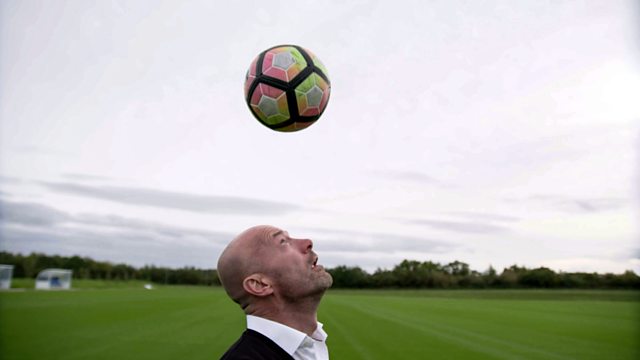
There has been a lot of publicity over the last year about the links between neurodegenerative disease and multiple mild head injuries incurred in many common sports including football and rugby, for example Alan Shearer's BBC documentary on the links between dementia and football.  Chronic traumatic encephalopathy (CTE) is a term that has been coined to describe patients who develop behavioural, mood, cognitive and motor disturbances after prolonged exposure to mild head injuries and show abnormal protein folding in the brain.


Alan Shearer, footballer (from the BBC documentary Alan Shearer: Dementia, Football and Me) https://www.bbc.co.uk/programmes/b09g0gzk)

This disease process bears similarities to Parkinson's Disease in that normal proteins become misfolded and then aggregate into abnormal deposits which is then associated with brain cell death. We have also known for a long time that previous history of head injuries and concussion increases your risk of Parkinson's. The study below, of almost 700 individuals including a significant number of athletes who had died and agreed to have an autopsy looks in more detail at the links between these conditions.

Overall, they found that people who had repeated head injury during life were much more likely to have the abnormal protein found in Parkinson's, alpha-synuclein, as well as the tau protein, which has been described in CTE. More exposure to head injury - for example greater than 8 years of playing contact sport increased the likelihood of Parkinson's-type pathology. They go on to look at the relationships between the different forms of protein and show that the distribution of the Parkinson's protein alpha-synculein is similar whether or not there was evidence of CTE and likely accounts for the movement problems seen in CTE.

Descriptions of protein-related brain diseases are ever expanding and I believe will guide us in  understanding the causes of Parkinson's and how the disease progresses. By studying the processes by which mild head injury leads to protein misfolding and how the different proteins interact we are gaining new mechanistic insights which we hope will lead to promising new treatments. From a prevention point of view, the neurological dangers of repetitive mild head injury are increasingly clear - while the authors here showed that playing more than 8 years of competitive sport was significantly associated with more pathology, we still need more data before we can develop clear recommendations for both our patients and the wider public. 

-Anna 

https://academic.oup.com/jnen/advance-article/doi/10.1093/jnen/nly065/5059623

Lewy Body Pathology and Chronic Traumatic Encephalopathy Associated With Contact Sports.

Adams JW, Alvarez VE, Mez J, Huber BR, Tripodis Y, Xia W, Meng G, Kubilus CA, Cormier K, Kiernan PT, Daneshvar DH, Chua AS, Svirsky S, Nicks R, Abdolmohammadi B, Evers L, Solomon TM, Cherry JD, Aytan N, Mahar I, Devine S, Auerbach S, Alosco ML, Nowinski CJ, Kowall NW, Goldstein LE, Dwyer B, Katz DI, Cantu RC, Stern RA, Au R, McKee AC, Stein TD
Traumatic brain injury has been associated with increased risk of Parkinson disease and parkinsonism, and parkinsonism and Lewy body disease (LBD) can occur with chronic traumatic encephalopathy (CTE). To test whether contact sports and CTE are associated with LBD, we compared deceased contact sports athletes (n = 269) to cohorts from the community (n = 164) and the Boston University Alzheimer disease(AD) Center (n = 261). Participants with CTE and LBD were more likely to have β-amyloid deposition, dementia, and parkinsonism than CTE alone (p < 0.05). Traditional and hierarchical clustering showed a similar pattern of LBD distribution in CTE compared to LBD alone that was most frequently neocortical, limbic, or brainstem. In the community-based cohort, years of contact sports play were associated with neocortical LBD (OR = 1.30 per year, p = 0.012), and in a pooled analysis a threshold of >8 years of play best predicted neocortical LBD (ROC analysis, OR = 6.24, 95% CI = 1.5-25, p = 0.011), adjusting for age, sex, and APOE ɛ4 allele status. Clinically, dementia was significantly associated with neocortical LBD, CTE stage, and AD; parkinsonism was associated with LBD pathology but not CTE stage. Contact sports participation may increase risk of developing neocortical LBD, and increased LBD frequency may partially explain extrapyramidal motor symptoms sometimes observed in CTE.

Friday, 3 November 2017

Fast-track approvals and Hippocrates - an old problem revisited

The UK news today announced government plans to fast-track drugs through the approval process (see this article from the BBC).

It is true that the approvals process is arduous and hugely costly. In a 2014 report examining the approvals process through different divisions of the US regulator, the FDA, the difference between the slowest and fastest divisions for median approval time was 400 days, i.e. over a year. It comes as little surprise to neurologists and people suffering neurological problems that the slowest was neurology and the fastest was cancer and antiviral drugs.

A significant risk of rushing things through is that vital safety signals get lost. In cancer, where a last-ditch drug might extend survival by a few weeks or months in a rapidly progressing fatal condition, these risks may be outweighed by the benefit given. However, in neurological diseases such as Parkinson’s disease, where people live with the condition for decades, even small risks must be given much greater weight. The chances of complete cure are low, and the number of patients that may be treated with it are much higher.

The Hippocratic oath instructs the physician to “First do no harm”. While we all strive to find the silver bullet for conditions such as Parkinson’s disease, motor neurone disease and so many others that cause such distress and suffering, we must ensure that we do so safely and effectively. We depend on a rigorous regulatory system to protect the public, but also to examine their processes and ensure the costs (both financial and opportunity costs to patients) are kept to a minimum.

RNR

NB these opinions are my own. We're keen to hear yours - please comment below.

For a very eloquent summary of the dillemas facing the FDA and how the fast-track process relates to neurology I recommend this article from the Lancet Neurology


Does neurology need a faster FDA?
Adrian Burton

The Lancet Neurology, 2014 vol 13(8) pp760-761.

Wednesday, 18 October 2017

Safe Driving

One of the obligations of doctors diagnosing someone with Parkinson’s disease is to advise them to tell the DVLA (Driving and Vehicle Licensing Authority – the UK’s driving license agency) of their diagnosis. When this happens, the DVLA then sends a form to the physician to ask for a professional judgement on their risk to themselves or others on the road.

The guidance for doctors is relatively scant:
! - Must notify the DVLA. 

May drive as long as safe vehicle control is maintained at all times. 

If the individual's condition is disabling and/or there is clinically significant variability in motor function, the licence will be refused or revoked. 

If driving is not impaired, licensing will be considered subject to satisfactory medical reports. 

A licence may be issued subject to regular review.

This article aims to help clinicians with some real-world evidence. They did assessments of vision, thinking and movement in healthy older adults as well as people with Parkinson’s. They then assessed their driving in a ‘kitted out’ car with lots of sensors and cameras to allow later scoring of errors etc. The participants then drove an 18 mile route in Iowa, on a mixture of road types. They then invited the participants to return two years later.
The first thing to say is that no one was told to stop the driving assessment early. The people with Parkinson’s were moderately affected (Hoehn & Yahr stage 2, where 1 is minimal symptoms affecting 1 side only – 5 being bed-bound), so the findings are not necessarily applicable to people who’ve just been diagnosed (nor those with more advanced disease).
The headlines from the paper are that people with PD made more mistakes at the beginning of the study (40 PD vs 32 controls), and two years later made significantly more mistakes (50 PD vs 35 control). Serious errors were, however, rare overall (but slightly more common in people with PD). Interestingly, when you only looked at those who did return, the baseline error rate was the same.
One large caveat that should be applied to this study is that of the 67 people with PD that started the study, only 28 returned for the 2 year assessment. 12 of these people had stopped driving in between, one had died and 26 declined the invitation to return. Significantly more healthy controls returned at 2 years (and only 1 of those that didn’t had stopped driving between assessments). Also, it should be noted that driving in Iowa is not necessarily the same as driving in the UK (indeed, driving in London is not the same as driving in Norfolk)

So how does this help me in clinic? Well, the factors that were the most significantly associated with predicting poor driving performance were – near visual acuity, change in the useful field of view, trail making tests (which measure planning and ‘executive function’) and the ability  to do everyday tasks (Activities of Daily Living on the UPDRS). Do we in the Parkinson’s field have a duty to do vision testing? It is interesting to see how different areas of research are converging – Have a look at Dr Rimona Weil’s research that has also hit the news recently 
http://www.telegraph.co.uk/science/2017/10/15/cats-dogs-helping-doctors-predict-dementia-people-parkinsons/ or directly to the research website https://vision-in-parkinsons.co.uk

RNR

http://www.neurology.org/lookup/doi/10.1212/WNL.0000000000004629

Longitudinal decline of driving safety in Parkinson disease
ABSTRACT
Objective: To longitudinally assess and predict on-road driving safety in Parkinson disease (PD).
Methods: Drivers with PD (n 5 67) and healthy controls (n 5 110) drove a standardized route in an instrumented vehicle and were invited to return 2 years later. A professional driving expert reviewed drive data and videos to score safety errors.
Results: At baseline, drivers with PD performed worse on visual, cognitive, and motor tests, and committed more road safety errors compared to controls (median PD 38.0 vs controls 30.5; p , 0.001). A smaller proportion of drivers with PD returned for repeat testing (42.8% vs 62.7%; p , 0.01). At baseline, returnees with PD made fewer errors than non-returnees with PD (median 34.5 vs 40.0; p , 0.05) and performed similar to control returnees (median 33). Baseline global cognitive performance of returnees with PD was better than that of non-returnees with PD, but worse than for control returnees (p , 0.05). After 2 years, returnees with PD showed greater cognitive decline and larger increase in error counts than control returnees (median increase PD 13.5 vs controls 3.0; p , 0.001). Driving error count increase in the returnees with PD was predicted by greater error count and worse visual acuity at baseline, and by greater interval worsening of global cognition, Unified Parkinson’s Disease Rating Scale activities of daily living score, executive functions, visual processing speed, and attention.
Conclusions: Despite drop out of the more impaired drivers within the PD cohort, returning drivers with PD, who drove like controls without PD at baseline, showed many more driving safety errors than controls after 2 years. Driving decline in PD was predicted by baseline driving performance and deterioration of cognitive, visual, and functional abnormalities on follow-up. Neurology® 2017;89:1–8


Mild Parkinsonian Signs in a Community Population

One question that many of the PREDICT-PD participants ask me is “I am slower than I used to be, does it mean that I am getting Parkinson’...